


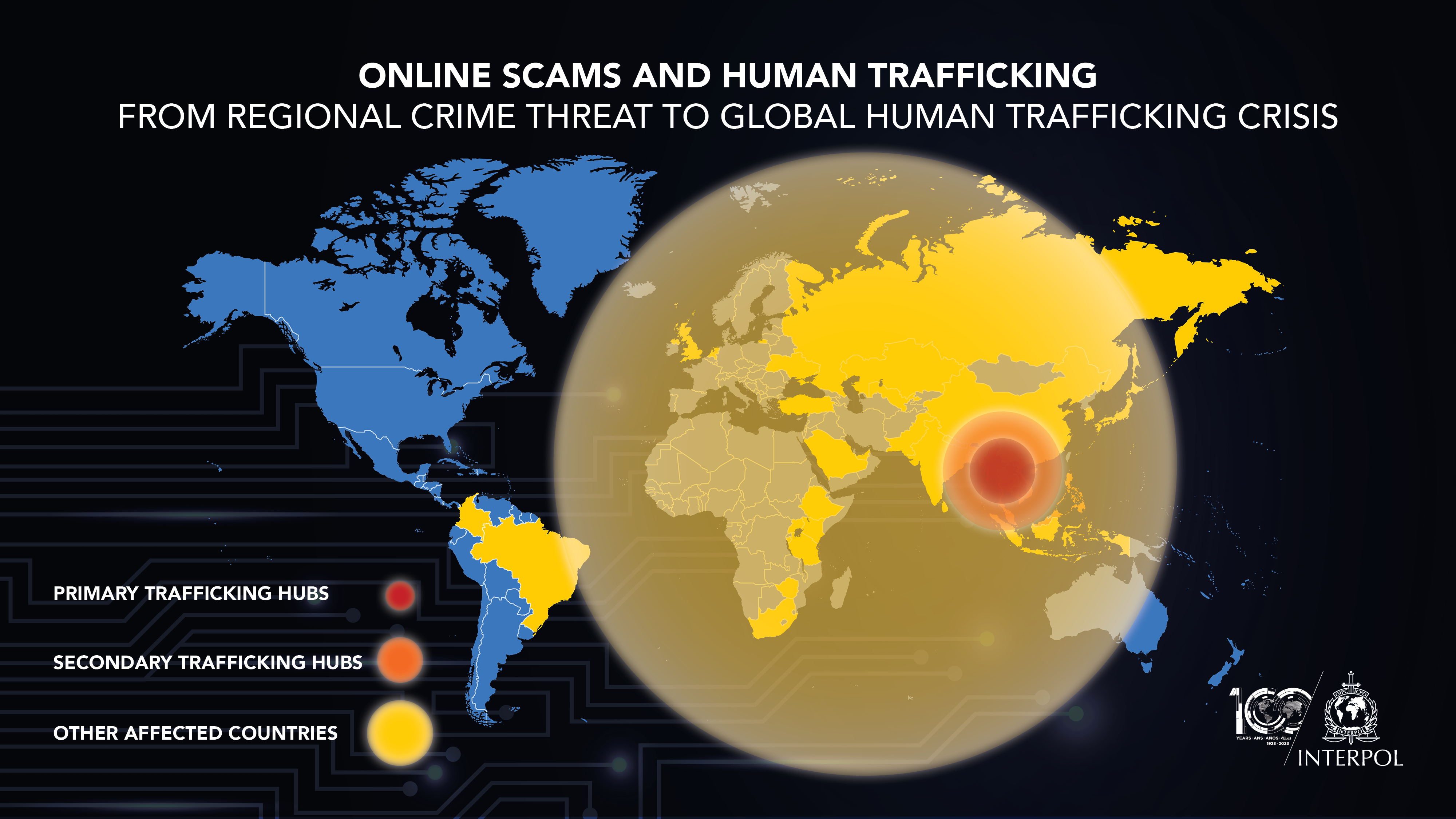
Understanding the Growing Threat of Transnational Scam Centres
The rise of transnational scam centres has captured global attention, and it is clear that these establishments are not only a threat to individual victims but also to the broader international community. In recent years, these fraudulent hubs have evolved into sophisticated networks, blending elements of voice phishing, romance scams, investment fraud, and even cryptocurrency deceptions. With victims lured by promises of lucrative overseas jobs, unsuspecting individuals are often forced into illegal schemes. This opinion piece aims to provide an in-depth look at the situation, offering insights on how the global community can work together to dismantle these dangerous criminal enterprises.
Recent actions by INTERPOL during its General Assembly have pulled back the curtain on these scam centres. The implementation of new cooperative measures, spearheaded by the Republic of Korea, underscores the necessity for a concerted international response. As we take a closer look at this issue, we see that the challenge isn’t merely about fraud—it is about a darker world where human trafficking, physical abuse, and even sexual exploitation come together in a tangled web of criminal activity.
Global Implications of Scam-Driven Fraud Schemes
Transnational scam centres are far from a local problem; they traverse boundaries and continents, affecting victims in over 60 countries. The expansion of these networks means that even regions historically untouched by such fraud schemes have started encountering their disruptive effects. Globalization and digital connectivity have allowed criminals to mask their operations behind cutting-edge technology, making it all the more challenging for law enforcement agencies to track and intercept them.
It is essential to recognize the role of financial crimes in fueling these operations. Criminal organizations often move illicit funds quickly across borders, creating a labyrinth of financial transactions that are as tricky as they are tangled. The way criminals obscure money trails with multiple layers of transfers is full of problems for investigators, as tracing every dollar becomes a nerve-racking process. This calls for stronger, real-time intelligence-sharing networks between international law enforcement agencies.
Bridging the Gaps Between Technology and Law Enforcement
The fast-evolving digital world has given scam centres new tools to deceive and manipulate their targets. Criminals are quick to adopt and adapt advanced technological methods, making it even more intimidating for police forces to keep pace. However, amid all the complicated pieces and confusing bits, one thing is clear: technology must be harnessed not only by criminals but also by the defenders of public safety.
Effective countermeasures include:
- Real-time intelligence-sharing to identify perpetrators and map out their modus operandi
- Coordinated multinational operations supported by INTERPOL and national agencies
- Enhanced financial tracking to target illicit assets and disrupt the funding of criminal networks
- Standardized emergency protocols to rescue and support victims
Each of these steps is critical—not only do they require robust cooperation between agencies, but they also demand significant investments in modern technology, data analytics, and cross-border coordination. The need to break through the tangled issues posed by these networks is urgent and must be met with decisive action.
The Broad Reach of Scam Centres: Impact on Communities and Societies
When we take a closer look at the societal impact of transnational scam centres, the picture is both bleak and eye-opening. These operations are loaded with issues that extend far beyond financial fraud; they attack the very fabric of vulnerable communities. Young job seekers lured by unrealistic promises find themselves embroiled in elaborate scams, their dreams dashed as they are exploited for fraudulent purposes.
Victims often suffer from multiple layers of abuse—physical, psychological, and social. The human toll is immeasurable. Those forced into these networks face abuse that includes physical violence, sexual exploitation, and even torture. Such outcomes are not just crimes against individuals but represent a profound breakdown in societal trust and safety. The repercussions ripple outward, affecting families, communities, and ultimately, entire nations.
International Cooperation: Charting a Path to Dismantle Criminal Networks
In an era where crime easily crosses borders, there is a dire need for the international community to stand together. Global agencies such as INTERPOL play a super important role in orchestrating cooperative measures that steer through the convoluted landscape of transnational crime. The resolution passed at the recent INTERPOL General Assembly is a testimony to the collective will to combat these criminal networks.
Key recommendations from this resolution include:
- Enhanced real-time sharing of data across borders to promptly identify and apprehend criminals.
- Joint multinational operations that pool resources and expertise from various countries.
- A dedicated focus on tracing and freezing illicit financial flows that support these activities.
- The creation of standardized emergency protocols that ensure the timely rescue and rehabilitation of victims.
- Promoting global awareness campaigns geared towards educating vulnerable groups about the warning signs of scam operations.
Each of these points underscores the fact that fighting transnational scam centres is not just a matter of enforcing the law—it is about protecting people from a web of exploitation and fraud that seeks to undermine the very foundations of modern society. The current landscape is as much about preventing financial losses as it is about stopping human suffering.
Technological Advancements and Their Dual-Edged Impact
Technological innovations stand at the crossroads of progress and peril. On one hand, they offer powerful tools for law enforcement, allowing for faster data processing and more efficient tracking of criminal movements. On the other hand, these same innovations equip scam centres with ever more sophisticated mechanisms to conceal their operations and defraud innocent people.
Criminals are becoming adept at using digital platforms to carry out scams, often using social media as a recruitment tool. As early as 2022, INTERPOL issued a Purple Notice to alert member countries about the strategic use of social media in these crimes. This evolution has only intensified with the rising popularity of cryptocurrencies and other digital payment methods, which offer a veil of anonymity and further complicate efforts to trace illicit transactions.
The dual-edged nature of technological advancements means that while law enforcement agencies are capable of deploying cutting-edge solutions, their adversaries are equally capable of adapting and innovating. This technological arms race is making the already tricky parts of transnational crime even more complicated. Therefore, every effort must be made to stay a few steps ahead by continuously upgrading technological tools and fostering international collaboration.
Effective Strategies for Countering Scam Centres
Given the multifaceted challenges posed by scam centres, it is crucial to adopt a comprehensive approach that combines technology, legal frameworks, and international cooperation. The following strategies are emerging as particularly effective in this battle:
| Strategy | Details |
|---|---|
| Real-Time Intelligence Sharing | Agencies need to constantly exchange data that includes the whereabouts, methods, and financial transactions of suspected criminals. This immediate flow of information helps in constructing a clearer picture of the scam operations across borders. |
| Multinational Joint Operations | Coordinated efforts that pool resources from various countries create a unified front against transnational criminals, leading to more effective raids and arrests. |
| Targeting Financial Flows | Since these networks are supported by intricate financial operations, tracing and freezing illicit funds holds the potential to cripple their operational capacity. |
| Emergency Response Protocols | Establishing standardized protocols to locate, rescue, and repatriate victims ensures that those who have been victimized receive timely and effective help. |
| Public Awareness Campaigns | Educating the public, especially vulnerable groups such as youths and job seekers, about the signs of fraudulent recruitment and scam tactics is crucial to prevention. |
Adopting these strategies is not a short-term fix but requires an ongoing commitment from all stakeholders—including international agencies, national law enforcement, and community organizations. It involves managing your way through a maze of challenges where every step can reveal hidden complexities and slight differences in criminal behaviour and tactics.
The Role of Public Awareness in Mitigating Scam Risks
Public awareness plays a key role in reducing the number of individuals who fall prey to scam centres. In many ways, prevention is as powerful as enforcement. Awareness campaigns that emphasize education about online recruitment scams, fraud techniques, and the red flags of get-rich-quick schemes can empower citizens.
To help build this foundation of awareness, several steps should be considered:
- Developing comprehensive educational materials that explain the risks in plain language, free from complex jargon.
- Collaborating with schools, universities, and community centres to spread the word.
- Engaging with social media influencers and community leaders who can reach people in a relatable and effective manner.
- Utilizing traditional media outlets, such as television and radio, to target audiences that may not be as active online.
These initiatives are not merely about disseminating information—they are about fostering a culture of vigilance. By making it easier for the public to steer through digital landscapes safely, society can reduce the pool of potential victims and minimize the operational success of scam centres.
Challenges in Rescuing and Rehabilitating Victims
One of the most nerve-racking aspects of transnational scam centres is the issue of victim rescue and rehabilitation. Once individuals find themselves trapped in these operations, their experience is often full of problems that include physical violence, mental strain, and sometimes irreversible trauma. Successfully extracting victims from these environments and ensuring they receive the support they need is a delicate task, replete with tricky parts and subtle details that demand a well-coordinated response.
Some of the specific challenges include:
- Identification of Victims: Recognizing when someone is being exploited in a scam centre can be a complicated process. Many victims may not immediately appear to be under duress, making it all the more challenging for officials to intervene.
- Safe Extraction: Rescuing individuals without putting them at further risk requires exceptionally precise, sometimes nerve-racking planning and execution.
- Psychosocial Rehabilitation: Victims often require long-term support to rebuild their lives. This includes counselling, medical support, and legal assistance to help navigate their way out of the aftermath of abuse.
Addressing these challenges effectively means creating a network of services that can work hand-in-hand with law enforcement. The establishment of standardized protocols for victim rescue and support ensures that no one is left behind as national and international agencies work together to dismantle these criminal networks.
Innovative Operations and the Future of International Law Enforcement
Looking ahead, the future of international law enforcement and its fight against transnational scam centres depends on innovation and adaptability. INTERPOL’s I-CORE initiative exemplifies the kind of forward-thinking response needed. By investing in advanced forensic capabilities, criminal intelligence analysis, and cross-border coordination centers, INTERPOL is laying the groundwork for a more unified global response.
The combination of real-time data sharing, joint operations, and proactive legal frameworks is essential if we are to manage your way through the morass of global crime. As the criminal networks evolve, law enforcement officials must remain agile, continually learning from past successes and setbacks to refine their strategies.
For example, in 2024, INTERPOL’s largest-ever global operation against trafficking-fuelled fraud saw the arrest of over 2,500 individuals across 116 countries and territories. Regional operations in Africa and Europe further highlight the effectiveness of multinational cooperation in tackling these crimes. Such collaborative efforts not only dismantle criminal networks but also send a strong message: that no country or community is beyond the reach of justice.
Long-Term Implications of a Coordinated Global Response
The global fight against scam centres is both a tactical and strategic challenge. In the short term, rapid action and intelligence-sharing can lead to significant arrests and financial seizures. However, the long-term success of these operations hinges on the establishment of robust legal frameworks and continuous capacity building among law enforcement agencies worldwide.
Among the key aspects for long-term success are:
- Legal Reforms: Updating and harmonizing legal frameworks to streamline extradition processes and evidence sharing between nations.
- Capacity Building: Training law enforcement personnel to spot subtle differences in criminal tactics and to figure a path through the maze of international fraud.
- Interagency Collaboration: Creating durable networks between national agencies, private financial institutions, and technology companies that may hold the keys to unlocking criminal activities.
- Victim-Centric Policies: Ensuring that every measure taken by law enforcement is also designed to support the victims, making the rehabilitation process as smooth as possible.
These long-term strategies are super important in safeguarding our future. They demonstrate that the international community is not content with simply putting out fires but is willing to build a resilient infrastructure that can better prevent, detect, and counter criminal networks as they evolve over time.
The Importance of Consolidated Data and Global Intelligence
Effective countermeasures against scam centres depend heavily on the quality and speed of information exchange. Given the decentralized nature of transnational crime, gathering and consolidating data across different jurisdictions is one of the most challenging yet essential tasks. As criminals use multiple channels to hide their operations, law enforcement agencies must work together to piece together the hidden layers behind every transaction and interaction.
This involves:
- Building centralized databases that allow authorized officials to access critical data quickly.
- Investing in forensic technologies that help in unearthing the little details, the fine points that may reveal important clues about criminal operations.
- Facilitating regular inter-agency briefings and meetings, ensuring that every participant is aware of the latest trends and operational tactics adopted by scam networks.
When agencies can share confidential tips, case studies, and even raw data securely, the global fight against transnational crime becomes a team effort rather than a series of isolated attempts. The benefits of such collaboration are evident not only in the speed of arrests but also in the reduction of repeat offenses, as criminals find it far more difficult to establish new networks when their digital footprints are under constant watch.
Lessons Learned from INTERPOL’s Ongoing Campaigns
Another key takeaway from recent INTERPOL operations is that prevention and intervention go hand in hand. The crime trend update released in June revealed that victims from over 60 countries have already fallen prey to scam centres—a statistic that continues to grow. Beyond the numbers, these operations illustrate how interconnected and overlapping different criminal enterprises can be, from drug trafficking to the illegal arms trade, and even wildlife smuggling.
Some of the lessons learned include:
- Early detection is critical—when law enforcement agencies are skilled at identifying the signs of an emerging scam centre, it becomes possible to intervene before criminal networks become too entrenched.
- Interdisciplinary cooperation is key—the fight against transnational crime is not solely the responsibility of police forces but involves financial regulators, cybersecurity experts, and social support organizations.
- Feedback loops matter—every operation, whether successful or not, provides fine shades of data that can help shape future policies and tactics.
- International cooperation, when executed effectively, can lead to momentous breakthroughs, as evidenced by the widespread arrests and financial disruptions witnessed in the recent global crackdown.
These insights highlight the nerve-racking need for governments and international organizations to continue investing in smarter, more integrated approaches. When every stakeholder—from local law enforcement to multinational agencies like INTERPOL—commits to proactive and coordinated strategies, the collective power to dismantle these scam centres becomes far more formidable.
Building Resilience Against Future Criminal Innovations
The sophistication of scam centres is a moving target. Criminals are constantly developing new methods to outsmart detection and evade capture. The unpredictable twists and turns in their approaches mean that the mechanisms designed to combat them must be equally adaptive and innovative. In this age of rapidly changing technology, lasting success will depend on fostering a culture of continuous improvement and learning within law enforcement agencies and their partners.
Key elements in building this resilience include:
- Ongoing Training and Development: Regular training sessions, international workshops, and simulation exercises are essential to keep officers updated on the latest trends and countermeasures.
- Investment in Research and Development: By funding research into emerging criminal tactics and the corresponding technological defenses, law enforcement agencies can stay ahead of cybercriminals and fraudsters.
- Cross-Sector Partnerships: Collaboration with the private sector, including banks and tech firms, can provide critical insights into patterns of financial fraud and data breaches.
- Flexible Legal Frameworks: Amendments to national and international laws should be considered continuously to minimize legal loopholes that criminals might exploit.
These measures are super important to ensure that the global fight against scam centres remains responsive and robust. As criminals refine their methods, so too must the systems built to protect our societies.
Charting a New Course With Coordinated International Strategies
An international law enforcement response that is both prompt and well-coordinated can not only dismantle existing scam centres but also serve as a deterrent against future operations. To achieve lasting success, global agencies need to work through the trying parts of bureaucratic challenges, ensuring that no jurisdiction becomes a safe haven for criminals.
Successful international strategies should include:
- Pre-emptive Intelligence Sharing: Establishing networks that facilitate the rapid sharing of information can prevent criminal operations from fully materializing.
- Coordinated Action Plans: Multinational task forces created with clear and well-communicated roles ensure that responses are unified, even during emergencies.
- Resource Allocation: International funding and resource sharing make it possible for even smaller nations to participate actively in global operations.
- Regular Evaluations: Continual assessment of policies and protocols will reveal areas that require improvement and ensure that best practices are maintained across the board.
These strategies can be visualized with a simplified roadmap:
| Phase | Key Actions |
|---|---|
| Preparation | Gathering data, establishing protocols, and training personnel |
| Intervention | Coordinated international raids, emergency victim support, and financial seizures |
| Evaluation | Post-operation reviews, data analysis, and policy adjustments |
| Prevention | Public awareness campaigns, legislative reforms, and ongoing training |
This systematic approach, when coupled with global determination, sends an unequivocal message: scam centres will not find a safe harbor anywhere in the world.
The Road Ahead: Staying Ahead of Crime
As we think about the future, it becomes apparent that the battle against transnational scam centres is an ongoing one. A dynamic, evolving menace demands a similarly adaptive response from the global community. Every law enforcement success, every thwarted scam, and every rescued victim strengthens our resolve. But more than that, it serves as a reminder of the importance of proactive, united efforts in a world where crime continually redefines its tactics.
Stakeholders at all levels must commit to not only understanding the current threats but also to anticipating future ones. This means constantly updating strategies, harnessing new technologies, and engaging with communities to raise awareness about the subtle details and fine shades of these criminal networks. Education, innovation, and international solidarity are the cornerstones of a safer global society.
It is clear that the global fight against scam centres is not a battle that can be won overnight. The challenges are intimidating and the stakes are enormous. But with a strategic, coordinated response—one that acknowledges both the financial and humanitarian dimensions of these crimes—we have the tools to turn the tide. We must remember that every victim saved, every scam disrupted, and every criminal brought to justice not only secures a safer future for our societies but also pays tribute to the resilience of communities around the world.
Concluding Thoughts: A Call to Global Unity and Action
In conclusion, it is imperative that we, as a global community, do not underestimate the threat posed by transnational scam centres. The tangled issues surrounding these criminal hubs require a robust, multifaceted response that combines technology, law enforcement, public awareness, and international cooperation. From the corridors of INTERPOL to grassroots community centers, every level of society has a role to play.
By taking a closer look at the current strategies and pushing for improvements, we can ensure that those who seek to exploit vulnerable individuals face a formidable and unified adversary. This is not merely an issue of stopping financial fraud—it is about preserving human dignity and protecting our communities from an insidious form of exploitation.
As we move forward, let us keep in mind the critical importance of sustained investment in intelligence-sharing, technological advancements, and coordinated global operations. The challenges are many; the twists and turns are unpredictable. However, by finding your way through these complicated pieces and ensuring that we support every victim along the way, we can dismantle these networks one operation at a time.
It is a nerve-racking task, to be sure, but it is one that is absolutely necessary. The global spread of scam centres is a wake-up call—a reminder that in our interconnected world, the security and well-being of one community is inextricably linked to that of another. In light of this, the need for international collaboration is more super important than ever.
Let this be a call to action for governments, law enforcement agencies, private corporations, and everyday citizens: We must stand together, remain vigilant, and continuously adapt our strategies to counteract these emerging criminal threats. Only then can we hope to secure a future where the freedom to pursue a better life is not marred by the shadow of transnational scams and human exploitation.
In our shared journey toward a safer global community, every initiative, every strategic operation, and every public awareness campaign contributes to building a resilient framework against crime. The battle is long, the stakes are high, but with unity, innovation, and unwavering determination, there is every reason to believe that we can overcome these challenges and ensure a safer, more just world.
Originally Post From https://www.interpol.int/News-and-Events/News/2025/Growing-threat-of-transnational-scam-centres-highlighted-at-INTERPOL-General-Assembly
Read more about this topic at
U.S. and U.K. Take Largest Action Ever Targeting ...
Growing threat of transnational scam centres highlighted at ...


No comments:
Post a Comment