


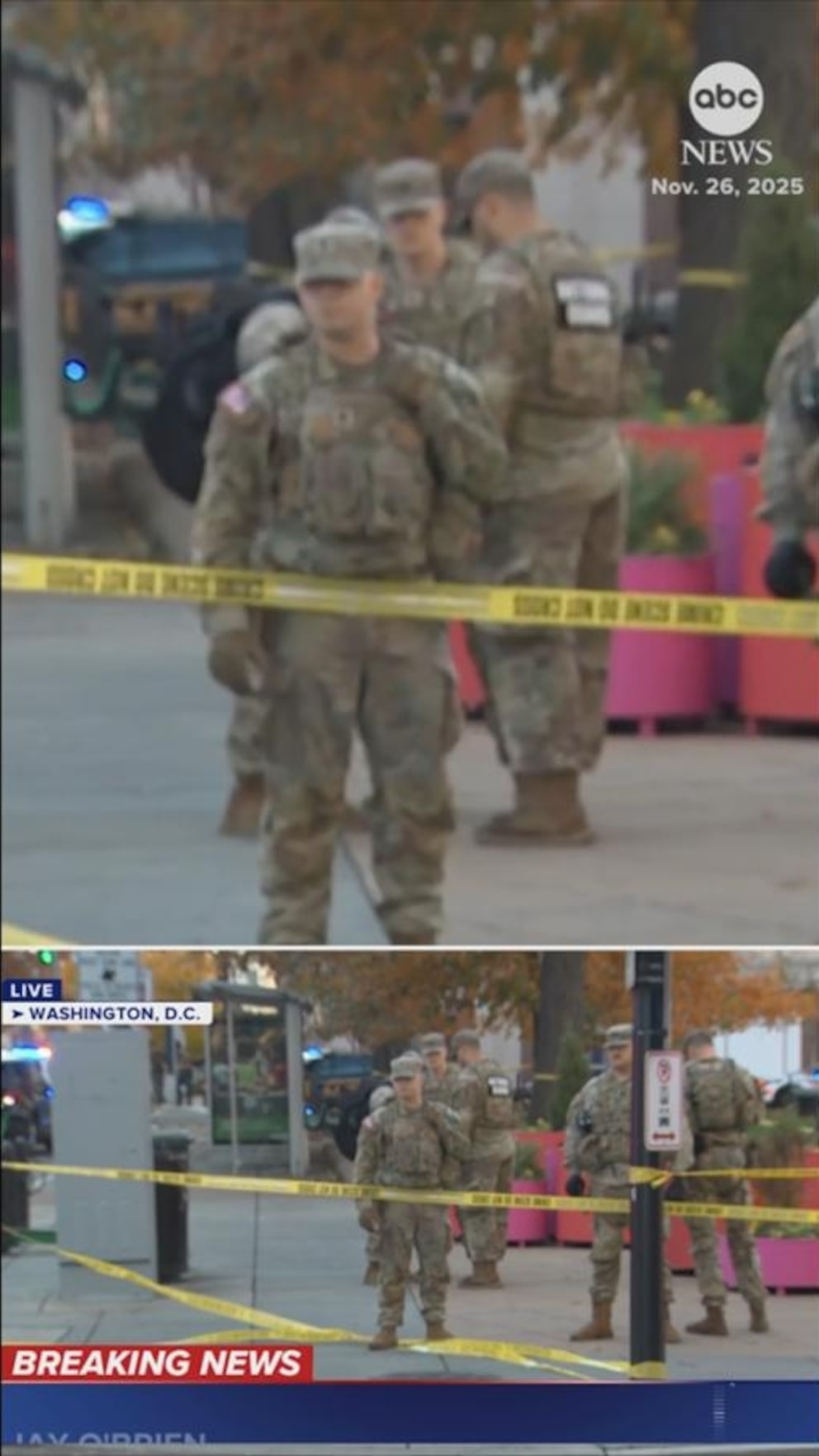
National Guard Shooting Incident: An Evolving Narrative
The recent incident involving two National Guard members, who were reported to have been shot near the White House, has sparked a wave of public concern and confusion. Early reports confused the public with conflicting information about the severity of the injuries suffered by these guardsmen. Initially, the governor of West Virginia stated that the troops had died, but he later walked back that statement. In our opinion, this chain of events has raised tricky questions about the communication practices of public officials during crises.
In a time when accurate information is key to public trust, these conflicting narratives not only heighten anxiety but also underline the importance of managing public statements with precision. Even slight differences in wording or timing can have a profound impact on public sentiment, inviting speculation and sometimes leading to misinterpretation of the events unfolding around us.
Challenging Parts of Crisis Communication
Understanding the Shifting Statements from Government Officials
Government communication during crises has long been full of problems when statements shift from one version of the story to another. The case in point stems from the confusing bits delivered by the West Virginia governor. Initially, the statement implied that both National Guard members had died, which quickly set the stage for shock and grief among those who followed the news closely. However, shortly after, a retraction clarified that both troops were critically injured and fighting for their lives.
Such twists and turns in messaging can leave the public feeling overwhelmed by the rapid changes in reported details. For many, trying to find your way through the series of updates becomes nerve-racking. When governors and other high-level officials make conflicting statements, they not only cast doubt on the reliability of the information provided but also on the leadership tasked with ensuring public safety during tense moments.
On a related note, this incident exemplifies how quickly urgent news can take on a life of its own on social media platforms, where phrases like “breaking news” are shared rapidly, often without context or further verification. The public’s need for clarity is accentuated when words are used that have a high emotional charge, such as “dead” versus “critical condition.”
Social Media Reactions: The Pulse of the Public
Analyzing Community Response on Social Platforms
The social media response to the National Guard incident has been equally intricate. Online communities quickly exchanged comments, sharing thoughts ranging from concern and prayers to disbelief and critique of the official statements. Some users expressed that the National Guard members, reportedly unarmed at the time, deserved every bit of our support more than rash commentary. This active dialogue, while useful in grasping the public’s emotional state, also illustrated the speed at which misinformation can proliferate online.
Many social media posts have highlighted the following key points:
- The initial confirmation of fatalities, later revised to critical injuries
- Speculation about whether the guardsmen were armed or unarmed during the incident
- Heartfelt messages and prayers for a speedy recovery
- Criticism aimed at drawing comparisons between the tragic event and other societal issues
This list is not exhaustive but it encapsulates many of the reactions seen on platforms like Twitter, Facebook, and Instagram. The online dialogue serves as a real-time pulse check of how citizens feel about both the incident and how it was handled by public authorities. While some voices commend the prompt efforts of emergency responders, others argue that the initial miscommunication did lasting damage to public trust in institutions.
Critical Examination: The Governor’s Role in Crisis Reporting
Assessing the Impact of a Retracted Death Statement
The role of a government official in these episodes is to provide clear and consistent guidance, particularly when every second counts. In this instance, the governor’s premature report—that the guardsmen had died—left many in a state of shock. However, this message was later retracted, altering the narrative from a tragic loss to a scenario where the soldiers were still actively fighting for their lives.
This misstep, regardless of intent, illuminates the tricky parts inherent in making statements under pressure. The responsibility to ensure the accuracy of public announcements has never been more critical. Even minor errors or premature declarations can escalate into what many consider nerve-racking misinformation, particularly as observers riskily try to steer through the data coming in from multiple sources.
We must carefully consider how the government navigates these situations; public statements are sometimes released in haste, ensuring that vital information reaches citizens quickly. But in cases where conflicting verbiage is used, it underlines the need for additional layers of verification—especially when human lives hang in the balance.
Legal Implications of Misinformation in High-Stakes Situations
An Overview of Legal Perspectives and Responsibilities
From a legal standpoint, incidents like these bring to the fore the key role that accurate communication plays during crises. The misreporting of the guardsmen’s condition, while possibly intended to provide instant updates, can have implications that stretch into the realm of legal liability and accountability. Public officials are expected to manage their statements clearly, ensuring that every word is weighed against potential consequences.
This case raises several questions for legal experts:
- What is the legal threshold for retracting a statement once it has been broadcast?
- Can public officials be held liable for the spread of incorrect information if the retraction does not reach all audiences?
- How do privacy protections and the need for public safety balance when sharing sensitive updates regarding active military personnel?
These questions reveal the subtle parts that often escape the headlines but remain essential to understanding the code of conduct expected of those in public office. Legal experts argue that a clear protocol must be established to ensure that, when misinformation is released inadvertently, it is corrected in a timely and robust manner, so as not to undermine public trust or provide fodder for further speculation.
Moreover, in a legal framework, accountability is key. Should further investigations reveal that the initial statement was made without proper verification, there may be calls for revisions in the way official communications are structured during emergencies. These reviews come at a time when the public is already stressed from both the incident itself and its surrounding complexities.
Managing the Messy Realities of Crisis Reporting
How Media and Officials Can Work Together for Clarity
The intertwined responsibilities of media professionals and government officials have never been more important than during emerging crises. The initial report concerning the National Guard members, coupled with a subsequent walk-back by state officials, forced the media to reconsider the way such news is reported. While speed is critical, accuracy remains equally essential, and this incident is a reminder of the delicate balance required between the two.
The media must take extra care to get into the fine points before reporting, especially when lives and national sentiment are at stake. Journalists often operate under intense pressure to be the first to break a story, but this race can sometimes lead to reporting that overlooks small distinctions between verified and unverified facts. Consequently, the public is put in a position where they must cope with a series of updates that may seem uncertain or on edge.
A coordinated effort between the government and media outlets might involve:
| Step | Description |
|---|---|
| Verification Process | Implementing a double-check system before releasing sensitive information. |
| Clear Communication Protocols | Establishing guidelines for what constitutes a preliminary report versus confirmed news. |
| Rapid Updates | Providing continuous updates as verified information is confirmed. |
| Retraction Procedures | Setting up a clear path for retracting any misinformation without further public confusion. |
These measures, while not a cure-all, can help both sides figure a path through the labyrinth of public information, especially when every action is being scrutinized under a microscope.
Ethical Considerations in Reporting Military Incidents
Finding the Right Balance Between Speed and Accuracy
Crises that involve military personnel require a delicate ethical balance. When stories like these break, there is an inherent tension between the urgency of news and the ethical duty to report accurately without adding to the public’s anxiety. The initial misstatement regarding the status of the National Guard members is a prime example of this conundrum.
Ethically, reporters face the challenge of providing immediate coverage while also ensuring that every claim is backed up by solid evidence. The fine shades of interpretation that distinguish a preliminary report from a confirmed statement can become blurred, especially when multiple sources are involved. With the responsibility to keep the public informed and calm, the media must be mindful of how their words might be interpreted, particularly in an era where every twist or turn in a narrative is dissected in real time.
To combat this issue, ethical guidelines for reporting have been proposed by various media organizations, including:
- Verifying all information with at least two independent sources before publishing.
- A clear indication of when information is preliminary and subject to change.
- Regular updates to published articles as confirmed details emerge.
- Providing context for potentially ambiguous information that might be misinterpreted by readers.
Following these guidelines not only helps in preventing public panic but also builds trust. In a time of crisis, citizens look to the media for reliable information. Without this reliability, the chain of trust that supports democratic discourse is weakened, leaving the public more vulnerable to the spread of anxiety and confusion.
Assessing the Broader Impact on National Trust and Public Confidence
Long-Term Repercussions on Public Institutions
The National Guard shooting incident is not just an isolated event; it has broader implications for the trust placed in public institutions. Every retraction, every conflicting statement, further complicates the public’s ability to differentiate between confirmed facts and unverified reports. This issue is particularly prevalent in politically charged environments where public opinion can be deeply divided.
Recent surveys and studies have shown that public confidence in government agencies can wane when officials fail to manage their communications effectively. For many citizens, the fine points of government statements are not mere technicalities—they are indicators of how much importance is placed on transparency and accountability. When officials make off-putting errors in their communication, it leaves a legacy of skepticism that can last far longer than the incident itself.
Key long-term repercussions include:
- Reduced trust in government announcements during emergencies.
- An increased propensity to rely on unofficial or unverified sources.
- A potential rise in public dissent or criticism against leadership.
- Challenges in coordinating future crisis responses due to lingering mistrust.
Each of these repercussions carries significant societal risks, as they can undermine the ability of public institutions to effectively mobilize resources during times of genuine need. The National Guard incident, while a specific event, should prompt a rethinking of how information is managed in the public sphere, so that essential communication mechanisms are not compromised in moments of crisis.
Reassessing Crisis Management Strategies in Government Communications
Recommendations for Improving Public Information Dissemination
In light of the confusion that has emerged over the status of the National Guard members, there is an off-putting but essential need to reexamine and refine the strategies used by government agencies in publishing critical information. Several key recommendations can be made:
- Establishing a Unified Command Center: Creating a centralized communication hub ensures that all public statements are verified and disseminated through a single, reliable channel.
- Enhanced Training for Spokespersons: Officials must be trained to recognize the small distinctions between preliminary and confirmed reports, so that every piece of information released is fully verified.
- Implementing Redundancy in Fact-Checking: Before any major announcement is broadcast, a rigorous internal review should be conducted to catch any potential missteps.
- Active Engagement with Media Partners: Working closely with respected media organizations can help ensure that corrections and updates are communicated promptly to the public.
- Transparent Correction Procedures: In the event of a mistake, a clear and visible retraction or correction should be issued, accompanied by an explanation of what went wrong and how it will be prevented in the future.
These recommendations, if implemented correctly, can help create a smoother path for public information dissemination in times when every second counts. Being proactive rather than reactive allows officials to manage the chaotic bits of real-time reporting and ensure that the public receives a consistent, unambiguous narrative.
Looking Ahead: The Role of Accountability and Reform
Ensuring Responsibility through Legal and Institutional Reform
In circumstances where miscommunication has the potential to cause widespread alarm, accountability is not only expected—it is crucial. The National Guard incident, marked by premature declarations and subsequent walk-backs, might serve as a catalyst for much-needed reforms in both legal protocols and institutional processes.
Legal frameworks can be improved by considering the following measures:
- Enacting policies that require a multi-tiered verification process before any public announcement is made.
- Introducing oversight committees that can review and audit the information flow during crises.
- Promoting a culture of responsibility, where mistakes in public communications lead to immediate corrective action and learning opportunities rather than political blame.
- Strengthening civil oversight over agencies responsible for crisis communication, ensuring that public concerns are addressed transparently and revert to the factual update as soon as possible.
Institutional reforms should align with the idea of fostering trust through clarity and accountability. Only by addressing the fine shades of responsibility can lawmakers and administrators hope to prevent future miscommunications that only serve to deepen public mistrust.
Understanding the Human Element in Crisis Reporting
Recognizing the Emotional Toll on the Affected Families and Communities
At the heart of every news report are real people—soldiers who risk their lives in the defense of their nation and families whose lives are transformed by events they have little control over. The shooting incident near the White House touches on deep emotional chords, with families, friends, and communities rallying in support as well as questioning the response of public officials.
It is essential to remember that behind every headline lies a human story. In this regard, citizens and officials alike must appreciate that the rapid pace of breaking news can create overwhelming conditions for those directly affected. The importance of understanding these human elements is underlined by the need for compassionate journalism and thoughtful legal proceedings.
Community stories and testimonials, such as those shared on social media, reveal several recurring themes:
- Expressions of support and prayers for a speedy recovery for the wounded
- Feelings of anger and frustration over perceived missteps in communication
- Calls for accountability and reform to protect future service members
- The impact of conflicting statements on the mental well-being of families and friends
By taking a closer look at these human angles, the media and legal institutions can better appreciate the nerve-racking consequences of misinformation. This, in turn, should drive efforts to manage not only the tactical implications of crisis reporting but also its emotionally charged aftermath.
Strategies for Improved Crisis Management: Lessons from the Incident
Aggregating Insights into a Roadmap for the Future
The unfolding of events around the National Guard members’ shooting provides several learning opportunities for both the government and the media. These lessons can act as a roadmap for more effective crisis management, ensuring that future communication efforts are more precise and less susceptible to misinterpretation.
Key strategies to consider include:
- Pre-Event Simulation Drills: Routine practice sessions that simulate emergency situations can help refine the processes for verifying and disseminating information.
- Integrating Technology for Real-Time Verification: By employing advanced communication tools and digital verification systems, public agencies can reduce the lag between events and accurate news updates.
- Strengthening Public Relations Teams: Well-trained media relations teams within government agencies can serve as the bridge between field operations and the media, ensuring that the public receives timely and correct details.
- Enhanced Coordination with Local Law Enforcement: Joint efforts between National Guard units, local authorities, and federal agencies can streamline communication channels and reduce the likelihood of miscommunication.
Each of these strategies stresses the importance of preparing not only for the on-field issues but also for managing the broader impact of every statement released. While no system is entirely immune to mistakes, a more coordinated effort can go a long way toward avoiding the nerve-racking outcomes of mixed messaging.
Conclusion: A Call for Clarity and Consistency in Times of Crisis
The recent incident near the White House has laid bare the vulnerabilities inherent in the ways that public information is conveyed during emergencies. The confusing bits found in the retelling of the National Guard shooting are a stark reminder that every piece of information shared by officials is imbued with the potential to shape public opinion dramatically.
It is imperative, now more than ever, for both government officials and media outlets to work together in managing the turbulent flow of news. This means taking into account the human elements behind every statistic, acknowledging the emotional turmoil that families endure, and calibrating every message with the utmost attention to accuracy and compassion.
Reforming communication strategies is not simply about preventing misinformation—it is about safeguarding the trust that the public places in both its leaders and its news sources. As we work through the tangled issues of crisis communication, all parties involved must commit to deploying thoughtful, well-vetted information that not only informs but also reassures a nation in distress.
In reflecting on the twists and turns of the recent events, let us remember that clarity and accountability in our communication channels are more than mere administrative tools—they are the bedrock upon which a resilient, informed society is built. Through responsible actions today, we lay the foundation for a safer and more stable tomorrow, ensuring that every service member, affected family, and concerned citizen can have confidence in the messages coming from those entrusted with public service.
Looking forward, it is the responsibility of all stakeholders—public officials, media professionals, legal experts, and community leaders—to learn from this unfolding scenario. By finding our way through the maze of real-time updates and rectifying our processes for the future, we can honor the bravery of those who risk their lives for our collective security while simultaneously upholding the principles of transparency and truth.
Ultimately, this episode stands as a reminder that in conditions as intense and tense as these, every nuance matters. The small distinctions between verified and unverified reports may seem like fine points, but they ultimately shape the course of public sentiment and trust. As we dig into the nitty-gritty of incident reporting and accountability, our goal must be to work collectively toward a system that leaves little room for error—where even in the most nerve-racking moments, accurate and compassionate communication prevails.
In conclusion, the National Guard shooting incident near one of the nation’s most recognizable landmarks should catalyze a shift toward better collaborative practices in times of crisis. The lessons learned here extend far beyond the specifics of this event, offering a blueprint for improved communication strategies that merge the urgency of breaking news with the responsibility of precise reporting. Let this be a turning point—a moment where we recognize that every word carries weight, and that the responsibility of our communication channels is essential to the integrity of both legal processes and democratic discourse.
As citizens and custodians of a well-informed society, we owe it to ourselves and to our defenders that future incidents are handled with the care, precision, and humanity they so rightfully deserve. With revamped policies, a commitment to accuracy, and the courage to acknowledge and correct our mistakes, we can foster a culture where the truth is communicated quickly, clearly, and compassionately—even when the news is both overwhelming and charged with emotion.
Originally Post From https://www.facebook.com/Boston25News/posts/breaking-two-national-guard-members-shot-wednesday-near-the-white-house-have-die/1313448610816802/
Read more about this topic at
Data on casualties | United Nations Office for the ... - OCHA oPt
Civilian deaths in conflict are surging, warns UN human rights ...


No comments:
Post a Comment